
Fabric Blinds Curtain Rods Window Treatments Trims & Tassels Wallpaper
1-800-590-5844
Drapery Pleat Styles
A drapery pleat is the folded heading sewn across the top of a curtain panel that gives it shape and fullness. The pleat style you choose sets the whole look of the drapery — from a crisp, tailored pinch pleat to a soft, formal goblet. Here is what each style looks like and how much fabric fullness it needs.
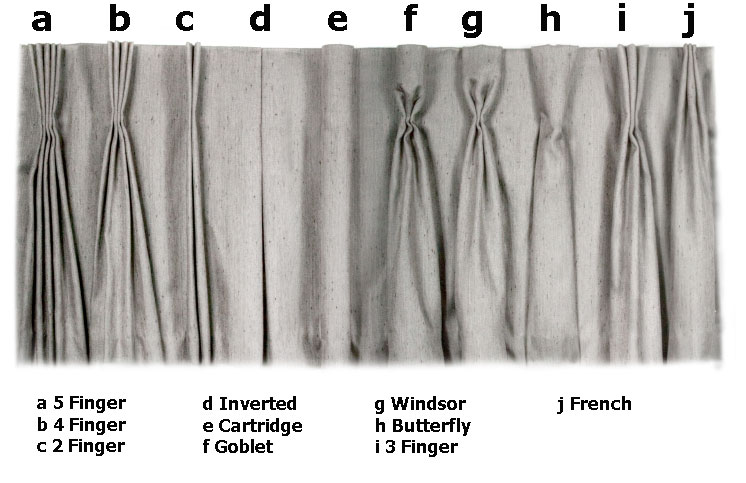
Pleat Styles and Fullness
- Five Finger Pleat — 3.5X Fullness
- The fullest pinch pleat, gathering fabric into five folds for a rich, formal, heavily gathered heading. Best where you want maximum fabric and a luxurious look.
- Four Finger Pleat — 3X Fullness
- Four folds per pleat for a full, traditional appearance with a bit more body than the classic three finger. A popular choice for formal rooms.
- Three Finger Pleat — 2.5X Fullness
- The classic, most common drapery pleat — three evenly gathered folds, tailored and timeless. Also known as the French pleat. Works beautifully on traversing rods.
- Two Finger Pleat — 2X Fullness
- Two folds per pleat for a cleaner, more contemporary and economical look that still reads tailored. A smart choice for modern rooms and larger windows.
- French Pleat — 2.5X Fullness
- A pinch pleat tapered and tacked near the base so the folds fan out toward the top. Elegant and traditional — the look most people picture when they think of pleated draperies.
- Goblet Pleat — 2X Fullness
- A rounded, wine-glass shaped pleat, often padded to hold its cup form. Formal and dramatic; usually made as stationary panels since the shaped tops do not stack when drawn.
- Cartridge Pleat — 2X Fullness
- Soft, rounded cylindrical rolls left unpinched across the top, creating a smooth, modern, uniform heading. Typically stationary. Elegant with light to medium fabrics.
- Inverted Pleat — 2.5X Fullness
- A box pleat reversed so the folds face inward, leaving a flat, tailored front. Clean and contemporary. Non-traversing — stationary panels only.
- Windsor Pleat — 2X Fullness
- A relaxed, softly rounded pleat that reads less formal than a crisp pinch pleat — a good middle ground between tailored and casual.
- Butterfly Pleat — 2X Fullness
- A two-pronged pleat that fans open like butterfly wings, with a light, airy feel. A pretty, less common option for a softer custom look.
Standard features of our custom draperies include a 4" double-turned heading and bottom hem, clear or smoke monofilament thread, drapery pins set to specification, and weighted hems. Many additional options are available to create exactly the look you want.
Shop Custom Window Treatments More Drapery Guides
Drapery Pleat Questions
What is the most common drapery pleat style?
The three finger pinch pleat, also called the French pleat, is the most common and traditional. Fabric is gathered into three folds at the top of each pleat for a tailored, evenly spaced look at about 2.5 times fullness.
What is the difference between a two finger and three finger pleat?
A two finger pleat gathers the fabric into two folds at about 2 times fullness for a cleaner, more contemporary and economical look. A three finger pleat uses three folds at about 2.5 times fullness for a fuller, more traditional appearance. Both are pinch pleats — the difference is the number of folds and the amount of fabric.
How much fabric fullness do I need for pleated draperies?
Fullness ranges from about 2 times the rod width for two finger, cartridge, goblet, and Windsor pleats, up to 3 times for four finger and 3.5 times for five finger pleats. More fullness means more fabric and a richer, more gathered look.
Which pleats are stationary versus traversing?
Goblet, cartridge, and inverted pleats are usually made as stationary panels because their shaped tops do not stack neatly when drawn. Pinch pleats and French pleats work well on traversing rods that open and close.