
Fabric Blinds Curtain Rods Window Treatments Trims & Tassels Wallpaper
1-800-590-5844
How Faux Wood Valances Work
This article provides details relevant to Lotus Windoware blinds and parts, along with broader industry standards and practices related to window blind valances and components.What Is a Crown Valance?
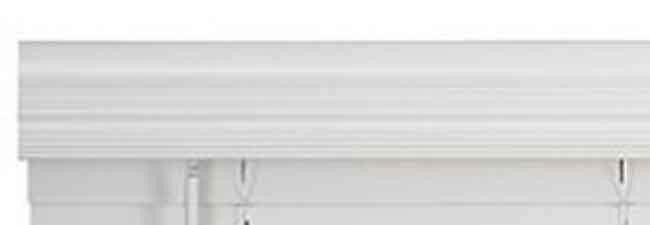 A crown valance is a decorative front piece installed across the top of a window blind to conceal the headrail and mounting hardware. It creates a finished, furniture-like appearance by covering the mechanical components of the blind while adding visual detail to the window treatment.
In addition to the front valance piece, many crown valances include side returns. These short pieces extend back toward the wall or window frame to cover the ends of the headrail, creating a clean and complete look when the blind is viewed from the side.
Crown valances can be manufactured with either straight-cut corners or mitered corners, depending on the blind style and installation method. These options affect how the front valance connects to the side returns and how the corners of the valance appear when installed.
When do I need returns?
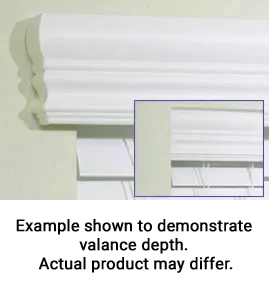 For inside-mounted blinds, returns are often unnecessary if the blind is installed deep enough within the window frame so the headrail and brackets are not visible from the side.
If the mounting brackets extend beyond the window frame, longer returns may be required to properly conceal the hardware.
When selecting return depth:
- 2½" returns will fully cover the mounting brackets on most outside-mounted blinds.
- 1⅝" returns are typically suitable when brackets are partially recessed within the window frame or casing.
- 3/4" & 5/8" Returns available with some styles
Straight Valances with Center Groove
Straight-cut valances feature a center groove design and use a corner connector to join the front valance to the side returns. This creates a clean 90° corner and is the standard configuration included with most blinds.
Miter Cut Valances
Mitered valances are cut at 45° angles, allowing the front valance and side returns to meet seamlessly at the corners—similar to a picture frame. This design eliminates the need for corner connectors and instead uses valance clips to attach the assembled valance to the headrail.
Mitered valances are typically chosen for a more custom, furniture-style appearance, especially on outside-mounted blinds.