
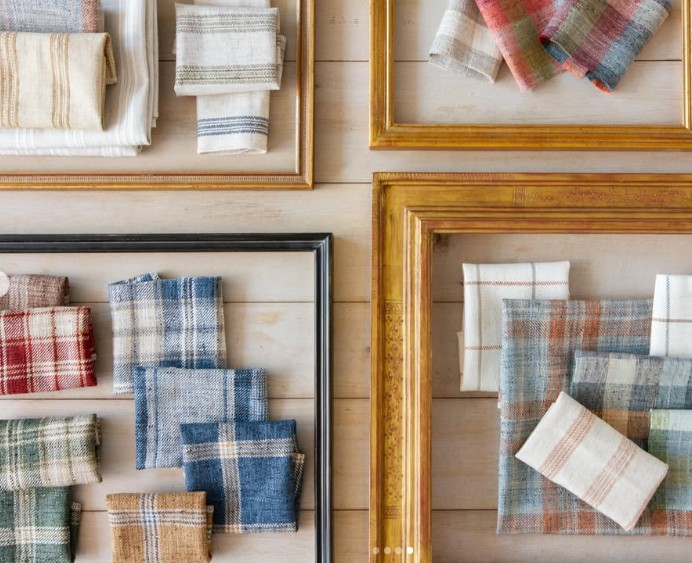
 To mix plaid patterns, start with one lead plaid, add a second pattern at a different scale, add one soft print, and ground it with a textured solid. Keep your colors pulled from the lead plaid and the room will read cozy instead of cluttered.
Plaid isn't a season. It's a decorating style, and a good one. It's the look of a room that's comfortable before it's anything else: a chair you actually sit in, a throw you actually use, and patterns that get along without anyone forcing them to. Here's how to build it.
1. Pick Your Lead Plaid
This is the largest pattern in the room, and it sets the palette. Put it where it'll be seen: drapery, a sofa, an armchair or a bedspread.
- Tip: Pull two or three colors out of your lead plaid. Those are your colors for everything else in the room.
- Shop: Browse our plaid and tartan fabrics to find your lead pattern.
2. Add a Second Pattern at a Different Scale
Scale is the whole trick. Two patterns the same size compete with each other. Different sizes cooperate.
- Large plaid: Pair it with something small, like a gingham, mini check or houndstooth.
- Small plaid: Pair it with a wider stripe.
- Where to start: Throw pillows are the easiest place to try a second pattern.
3. Add One Soft Print
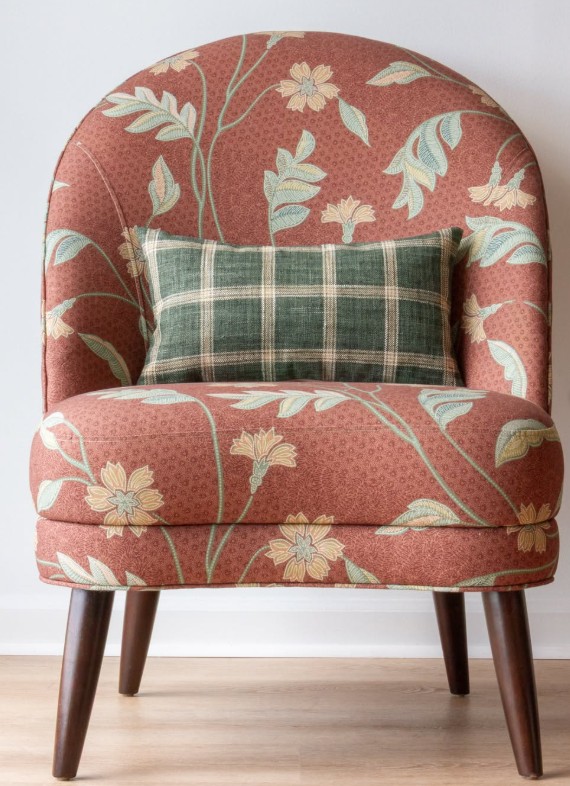
A small floral, block print floral, calico or paisley takes the edge off all those straight lines.
- Tip: Keep it to one or two pieces, like a pillow, a chair seat or a lampshade.
4. Ground It with Texture
Every plaid room needs a solid with some character: wool, tweed, chenille, velvet or a nubby linen. That's where the eye rests. Skip it, and the room starts to look like a sample book exploded.
Plaid Pattern Combinations That Work
- Cabin: Buffalo check drapery, houndstooth pillows, tweed sofa
- Farmhouse: Tartan armchair, gingham café curtains, small floral seat cushions
- Library: Plaid wingback, herringbone ottoman, paisley pillow, velvet or leather solid
- Bedroom: Plaid duvet, striped shams, mini-check bed skirt, chenille throw
Rules of Thumb
- Keep it to two plaids per room unless you're feeling brave.
- Repeat every color at least twice so nothing looks orphaned.
- When in doubt, add more solid, not more pattern.
- If you already own a plaid you love, use it. The formula works with any palette. Decorate what you love.
Test Your Combination with Samples
Samples are the easiest way to test a mix. Order three or four fabric samples, lay them together on the chair or bed in your own light, and you'll know quickly which ones belong. Not sure how much fabric you'll need? Check our upholstery yardage chart, or give us a call at 1-800-590-5844 and we'll help you put your combination together.
Common Questions
Can you put two plaids in one room?
Yes. Two plaids work well together when they are different sizes and share colors. Keep it to two plaids per room unless you are confident, and repeat every color at least twice so nothing looks out of place.
What patterns go with plaid?
Gingham, mini checks, houndstooth and stripes pair well with plaid when they are a different scale. A small floral, calico or paisley softens the look, and a textured solid like tweed, chenille or velvet ties it together.
How do you keep a plaid room from looking cluttered?
Vary the scale of your patterns, pull all colors from your lead plaid, and add solids with texture. When in doubt, add more solid, not more pattern.